What If Slow Travel in Mérida Was All About the Food?
You know that feeling when a place just gets you? That’s Mérida. I went looking for Mayan culture and found myself chasing down smoky cochinita pibil from street corners instead. Forget ticking off landmarks—this city pulls you in through your stomach. Eating here isn’t just dining; it’s slow travel at its most delicious. Every bite tells a story, every market hides a moment waiting to happen. The rhythm of life here doesn’t rush—it simmers, like a pot of recado rojo over a low flame. In Mérida, time slows not because you plan it to, but because the flavors demand it.
Arrival with No Agenda
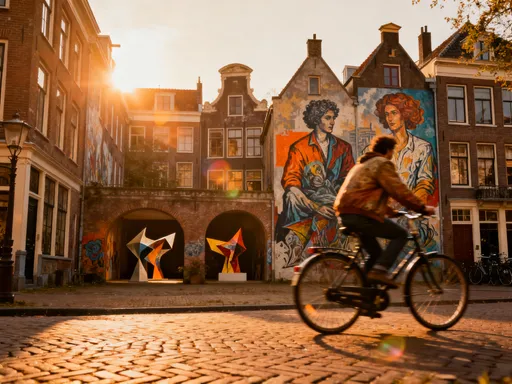
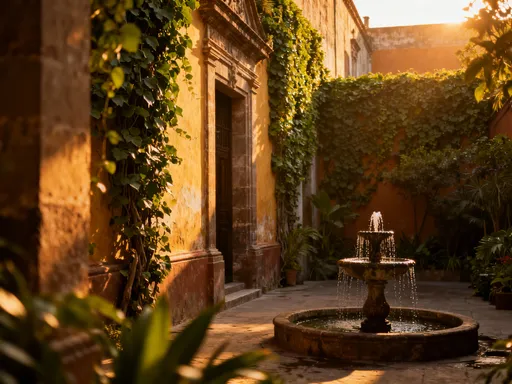
Stepping off the bus into the warm, golden light of Mérida feels like slipping into a well-worn sweater. The colonial buildings, painted in soft ochres, terracottas, and sky blues, rise gently along broad avenues shaded by towering trees. There’s no jolt of sensory overload, no urgent call to action—just the quiet hum of ceiling fans and the distant chime of a church bell. Unlike destinations that demand you sprint from museum to monument, Mérida invites you to pause. It doesn’t care if you’ve never heard of Paseo de Montejo or can’t pronounce “henequén.” It simply asks you to be present.
This city rewards those who arrive with empty hands and open hearts. There’s a quiet liberation in abandoning the tourist checklist—the kind that insists you “see everything” in 48 hours. In Mérida, that pace would be unthinkable. Instead, the real journey begins not with a map, but with a hunger. The moment you let go of rigid plans, the city begins to reveal itself in subtle ways: a vendor waving you over with a warm smile, a scent of grilled meat curling around a corner, the sound of laughter from a courtyard where a family shares a late breakfast.
Without an agenda, every block becomes a possibility. You might find yourself drawn to a tiny fonda with plastic chairs and a handwritten menu, or pause at a roadside stand where a woman in a floral apron presses tortillas by hand. These are not attractions to be checked off—they are moments to be lived. And in Mérida, the most meaningful moments almost always involve food.
Why Food Becomes the Compass
In many cities, food is a break between sightseeing. In Mérida, it is the sightseeing. The cuisine here doesn’t just feed the body—it guides the traveler toward a deeper understanding of place. Yucatecan food is a living archive, preserving centuries of history in every dish. It’s impossible to eat here without engaging with the land, the people, and the past. The flavors are bold, complex, and deeply rooted—sour Seville oranges, earthy achiote paste, fiery habanero peppers, and the smoky depth of pit-roasted meats. These are not random ingredients; they are threads in a cultural tapestry.
Take recado, the vibrant marinade used in so many local dishes. There are dozens of varieties—red, green, black—each tied to a specific preparation and tradition. A family might guard their recipe for recado rojo as closely as a birthright, passing it down through generations. When you taste cochinita pibil, marinated in achiote and bitter orange and slow-cooked in banana leaves, you’re tasting a method perfected by the ancient Maya and refined over centuries. This isn’t fusion for trend’s sake—it’s continuity.
Eating in Mérida becomes an act of participation. You’re not just observing culture—you’re joining it. When you sit down to a plate of papadzules, boiled eggs wrapped in corn tortillas and bathed in pumpkin seed sauce, you’re connecting with agricultural traditions that date back to pre-Columbian times. When you sip a glass of horchata made with rice, cinnamon, and almond, you’re tasting the Spanish influence that blended with local ingredients to create something entirely new. Food here isn’t a sideshow. It’s the main event—the most honest and delicious way to understand a place.
Breakfast Like a Local: The Ritual of Morning Markets
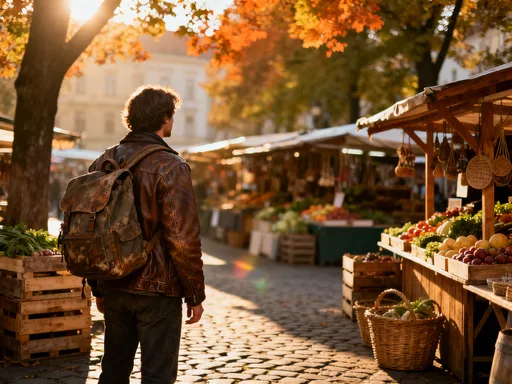
If you want to know how Mérida lives, start your day at Mercado Lucas de Gálvez. Long before the sun climbs high, the market is already awake. Vendors arrange pyramids of ripe mangoes, bright chilies, and spiky mamey fruit. The air is thick with the scent of frying plantains, simmering black beans, and freshly ground coffee. This is not a tourist spectacle—it’s a working market, the heartbeat of daily life. And for visitors willing to step inside, it offers one of the most authentic experiences in the city.
Breakfast here is a ritual, not a meal. Families gather at communal tables, sharing platters of panuchos and salbutes—crispy tortillas topped with shredded turkey, pickled onions, and avocado. Abuelas in wide aprons move with practiced ease, shaping tortillas by hand and pressing them on hot comals. The rhythm is unhurried. No one checks their watch. Coffee is sipped slowly, conversations linger, and children dart between stalls with sticky fingers. To eat here is to be welcomed into a moment of ordinary beauty.
There’s a quiet intimacy in these morning scenes. A vendor might offer you a taste of her homemade salsa, watching your face for a reaction. Another might pack an extra tamal into your bag “for later.” These gestures aren’t performances—they’re expressions of genuine warmth. The market doesn’t cater to travelers; it includes them. And in doing so, it teaches a simple truth: the best way to connect with a culture is often through its most routine moments. In Mérida, breakfast is more than fuel. It’s a daily celebration of community, flavor, and continuity.
Hidden Courtyards and Secret Menus
Some of the most memorable meals in Mérida don’t appear on any map. They happen in quiet corners—behind unmarked doors, down cobblestone alleys, inside colonial homes converted into family-run fondas. These are not restaurants in the traditional sense. They are extensions of someone’s kitchen, often run by women who learned to cook at their mother’s side. Reservations might not exist. Menus might be spoken, not written. And the best dishes? Often unlisted.
One afternoon, I followed a narrow path behind a pastel-colored church and found a small courtyard shaded by a jacaranda tree. A woman in a floral dress greeted me with a nod and gestured to a wooden table. I ordered what the family was eating—queque, a savory tamal-like dish wrapped in banana leaves. But when she saw me watching her prepare sikil pak, a creamy dip made from roasted pumpkin seeds and tomato, she brought me a small bowl “because you look curious.” There was no charge. Just a quiet exchange of interest and kindness.
These moments define the soul of Mérida’s food culture. They can’t be rushed or scheduled. They require openness, a willingness to wander without purpose, and a readiness to accept hospitality on its own terms. In a world where travel is often filtered through apps and ratings, these experiences remind us that authenticity isn’t found in stars or reviews. It’s found in eye contact, in shared silence over a meal, in the way someone serves you something they love—not because it’s famous, but because it’s theirs.
The Art of Lingering Over Lunch
In Mérida, lunch is not a break. It is an event. The midday meal unfolds slowly, often stretching over two or three hours. Families and friends gather in shaded patios, garden courtyards, or quiet neighborhood fondas. The rhythm is deliberate: first, small bites—antojitos like papadzules or salbutes. Then, the main course: perhaps queso relleno, a rich dish of Edam cheese stuffed with ground meat and vegetables, or poc chuc, grilled pork marinated in sour orange and served with pickled onions. Finally, dulces—sweet preserves made from fruit like guava, mamey, or sapodilla—served with strong, dark coffee.
This daily pause is more than a meal. It’s a cultural philosophy. In a world that glorifies speed and efficiency, Mérida chooses presence. Time expands here. Conversations meander. Laughter lingers. Children play underfoot. The heat of the day makes haste impossible, but even if it didn’t, the culture wouldn’t allow it. To eat in Mérida is to accept a different relationship with time—one where connection matters more than productivity.
For the slow traveler, this is a revelation. We often think of travel as something to be maximized—more sights, more photos, more stamps in the passport. But in Mérida, the opposite is true. The deeper you go, the slower you move. And the more you taste, the less you feel the need to rush. A three-hour lunch isn’t indulgence. It’s education. It teaches patience, presence, and the quiet joy of savoring—not just food, but life.
Street Food as Cultural Code
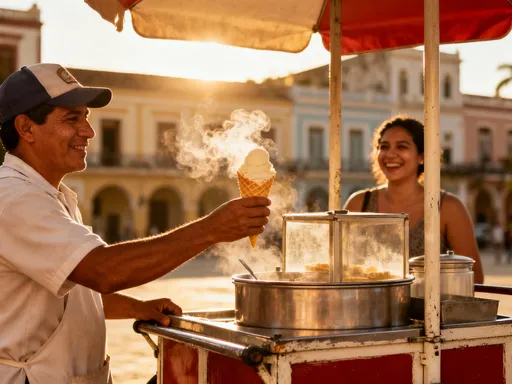
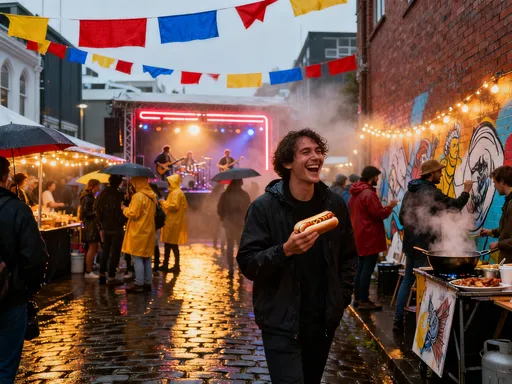
As evening falls, Mérida’s streets come alive with the glow of food stalls. Parque Santa Lucía becomes a stage for culinary theater—vendors flip marquesitas on hot griddles, their crisp shells filled with gooey Edam cheese and sweet condiments. On quiet corners of Paseo de Montejo, men grill skewers of al pastor, the scent of chilies and pineapple curling into the warm night air. This is where Yucatecan food reveals its full complexity—a blend of Mayan tradition, Spanish influence, and Caribbean flair, all served on paper plates.
Street food here is more than convenience. It’s cultural code. Each bite carries history. Papadzules, for example, are ancient—corn tortillas rolled around hard-boiled eggs and covered in a bright green pumpkin seed sauce, a recipe with deep roots in Mayan agriculture. Salbutes, lighter and crispier, reflect later influences, their toppings of turkey or shrimp hinting at colonial trade routes. Marquesitas, with their French-inspired batter and European cheese, speak to Mérida’s 19th-century prosperity and cosmopolitan tastes.
For visitors, navigating this world can be both thrilling and intimidating. The best approach is simple: follow the locals. A busy stall is usually a safe one. Watch how people eat—often with their hands, using small corn tortillas to scoop up sauces. Ask politely before taking photos. And always carry small bills—many vendors don’t accept cards. Most importantly, eat with curiosity, not fear. The risks are low, the rewards immense. Every bite is a conversation with history, a taste of identity, a moment of connection.
Leaving With More Than a Full Stomach
When it’s time to leave Mérida, you won’t remember the exact shade of the buildings or the name of every street you walked. What you’ll carry with you are the tastes, the smells, the moments. The laughter shared with a tamale vendor who taught you how to eat spicy salsa without flinching. The quiet gratitude of an abuela who served you extra beans “because you’re far from home.” The surprise of discovering that sikil pak—something you’d never heard of—now feels like comfort.
Travel that centers on food is never just about eating. It’s about slowing down enough to notice, to connect, to belong—even if only for a few days. In Mérida, the kitchen is the heart of the home, and the home is the heart of the culture. To be invited to share a meal is to be welcomed into that heart. And once you’ve tasted that kind of warmth, it changes how you see the world.
True travel isn’t measured in miles. It’s measured in moments of understanding—when a flavor unlocks a story, when a stranger becomes a host, when a meal becomes a memory. Mérida doesn’t give you souvenirs. It gives you something better: a deeper way of traveling. One that values depth over distance, connection over collection, and the simple, profound joy of tasting life, one bite at a time.